

Off-market deal flow is not the same as browsing public listings or checking one property record. Investors often need to find distressed properties, compare owner data, organize leads, review deal context, and decide whether a property is worth moving into outreach, analysis, or disposition. Off-market does not automatically mean discounted, exclusive, or ready to buy. This article focuses on deal research, investor workflows, buyer networks, and follow-up tools, not financial advice or guaranteed deal volume. Every lead still needs verification through property records, ownership checks, local market data, and responsible communication.
ForeclosureHub stays first because it gives users distressed-property context before they move into off-market workflows or buyer platforms. InvestorLift adds a disposition and buyer-network layer for investors who need to move deals after sourcing them. MyHouseDeals gives users a direct place to review investment property opportunities. REI BlackBook supports CRM, follow-up, websites, phone tracking, and investor workflow organization. This list was built around deal flow and execution, not another foreclosure listing comparison.
Deal Flow Tools Chosen for This List
The selected companies cover different stages of an investor workflow. ForeclosureHub helps users start with distressed-property context and owner data. InvestorLift is included for investors who need a platform connected to buyers, deal posting, and disposition. MyHouseDeals gives users a place to review investor-oriented property opportunities. REI BlackBook supports the follow-up and organization side once leads and conversations begin. Here is a quick role breakdown:
- ForeclosureHub: Distressed-property search, owner data, tax details, market information, and free skip tracing;
- InvestorLift: Buyer network, deal posting, disposition workflow, and investor marketplace support;
- MyHouseDeals: Investment property listings, wholesale deals, motivated seller leads, and market browsing;
- REI BlackBook: CRM, follow-up, websites, call tracking, SMS tools, and investor workflow organization.
The best setup depends on where the process gets stuck: finding properties, moving deals, browsing opportunities, or managing follow-up. A stronger workflow usually separates those steps instead of forcing one tool to handle everything.
1. ForeclosureHub
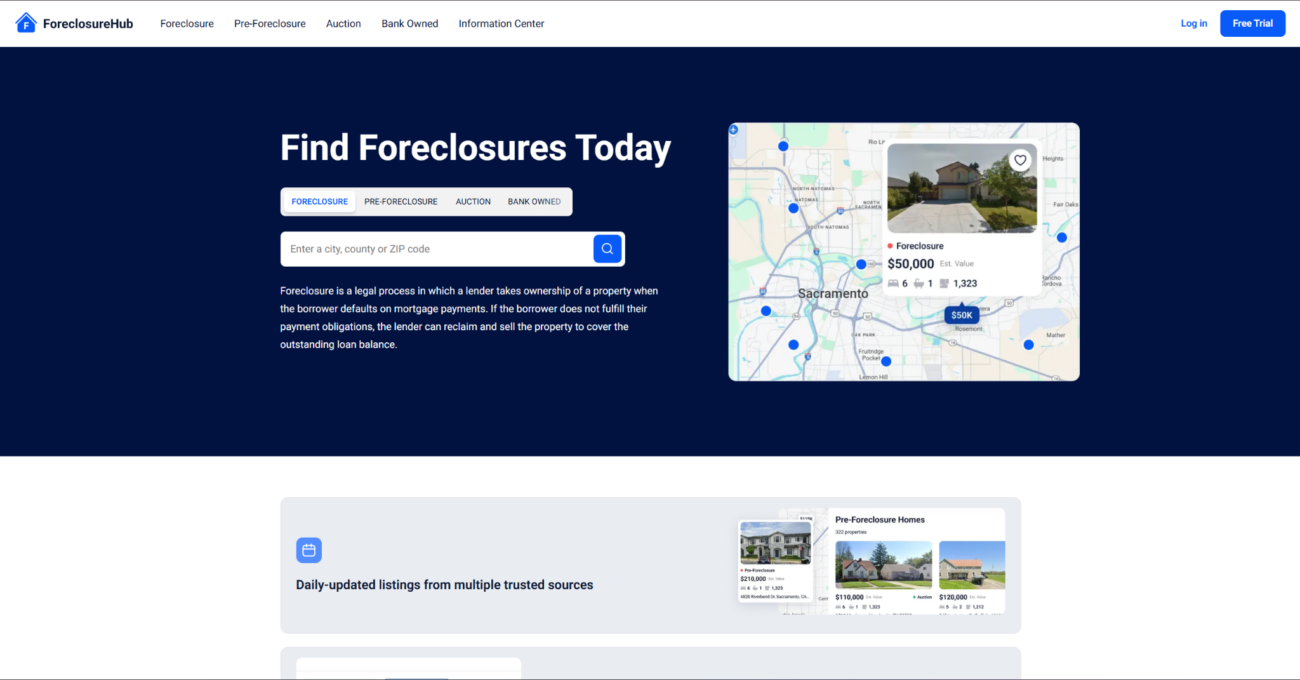
ForeclosureHub takes the first position because off-market work needs property context before anything moves into outreach or deal flow. Users can search pre-foreclosure, foreclosure, bank-owned, and auction listings across the United States. The ForeclosureHub off-market property search tool gives users a focused way to review distressed-property data before they compare outside deal-flow tools. The platform provides owner details, mortgage records, tax data, transaction history, market information, and free skip tracing. Some county data may update faster than others, and there is no dedicated mobile app yet.
ForeclosureHub should not be framed as a buyer marketplace or disposition platform. Its role is to help users identify and review properties before those leads move into outreach, analysis, or investor workflows. Owner data, debt context, taxes, transaction history, and market information can help users avoid chasing weak records. Free skip tracing can support owner research, but contact data still needs verification. ForeclosureHub works best as the first research layer before users move into CRM, buyer list, or marketplace tools.
ForeclosureHub connects distressed-property discovery with the first layer of owner and market research. It should support the early research stage, not replace deeper due diligence or responsible outreach:
- Pre-foreclosure, foreclosure, bank-owned, and auction listings;
- Free skip tracing included with every property search;
- Owner, mortgage, tax, assessment, and transaction details;
- Market data for sale, rental, and comparable property checks;
- Saved searches and email alerts for matching properties.
ForeclosureHub helps users decide whether a potential deal deserves more time before moving it into follow-up or disposition systems.
2. InvestorLift
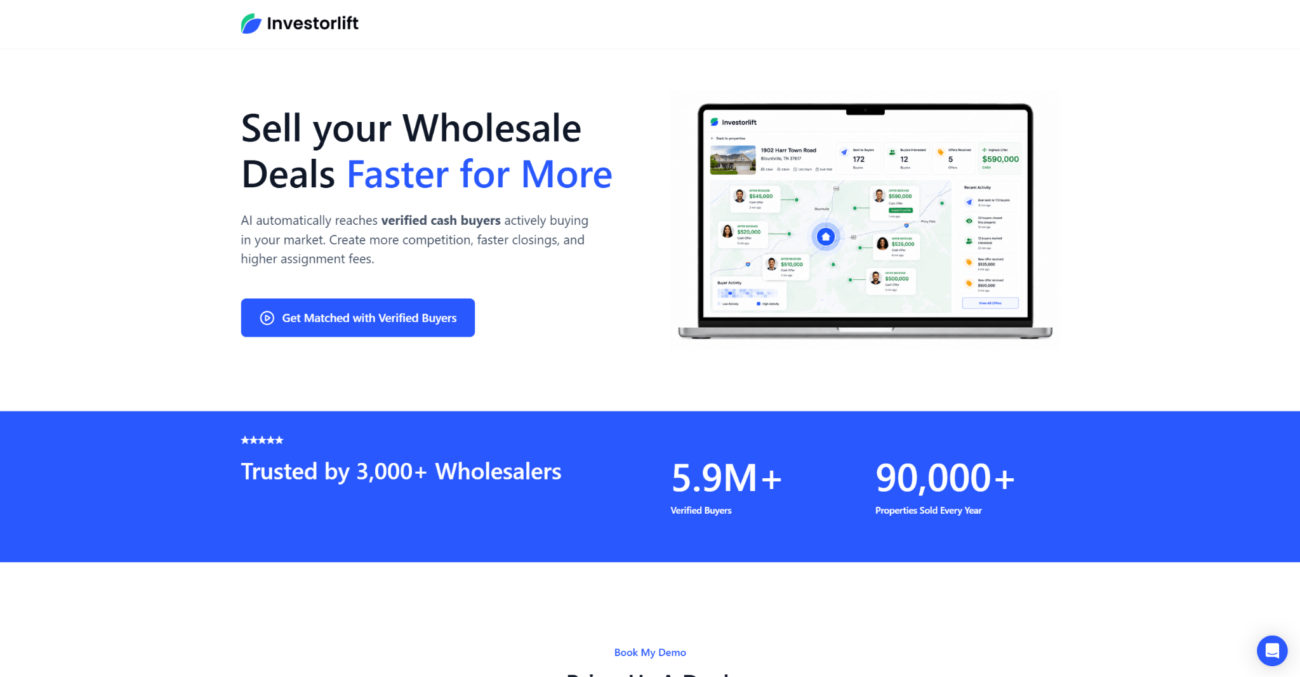
InvestorLift brings the article into disposition and buyer-network territory. It is used by real estate investors who need to move deals, connect with buyers, and manage deal activity. The platform becomes more relevant after a potential property has already been identified or packaged for investor review. A buyer network will not fix weak pricing, poor property data, or unrealistic deal assumptions. InvestorLift makes the most sense when the user needs deal movement rather than early property discovery.
Many off-market investors struggle not only with finding a property, but also with moving it to the right buyer or investor audience. InvestorLift can help when deal presentation, buyer access, and disposition workflow matter. Users still need strong deal math, clear property details, and clean communication before posting or sharing an opportunity. The platform should be paired with solid sourcing and due diligence. InvestorLift is a better match for users who already have deals or steady deal flow and need a stronger path to market.
InvestorLift belongs in this list because off-market work does not end when a lead is found. Disposition and buyer engagement can decide whether a deal moves or stalls:
- Investor buyer network;
- Deal posting and disposition workflow;
- Support for moving investor deals;
- Buyer activity and deal presentation tools;
- Option for users after sourcing and review.
InvestorLift can help users move opportunities forward, but the deal still needs correct pricing, clear data, and verified property context.
3. MyHouseDeals
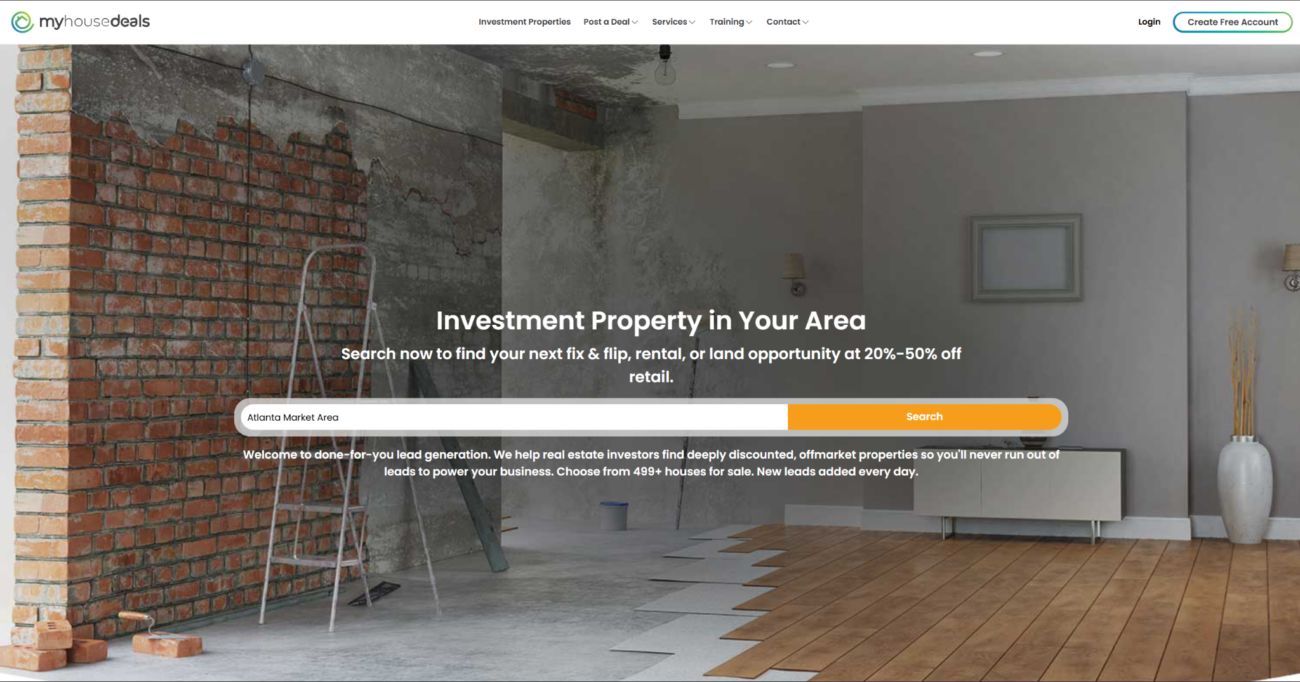
MyHouseDeals gives the Top 4 a direct investment property browsing source. Users can review investment properties, wholesale deals, and motivated seller opportunities depending on location and availability. This can save time when the user wants to see potential deals without building every source from scratch. Listed investment opportunities still require independent verification. MyHouseDeals is better for browsing deal opportunities than for full due diligence.
Off-market research can be time-consuming when users rely only on manual property searches. MyHouseDeals can help users look through available investor-oriented opportunities and compare what is being offered in different markets. The user still needs to check property condition, owner details, pricing, liens, rental logic, and local comps before acting. A posted deal should not be treated as automatically underpriced or low risk. MyHouseDeals is a better choice for users who want a deal browsing source before deeper analysis.
MyHouseDeals is included because some investors want a place to review available opportunities first. The platform should be treated as a starting point, not proof that a deal works:
- Investment property listings;
- Wholesale deal browsing;
- Motivated seller opportunities;
- Market-based property search;
- Early deal comparison.
MyHouseDeals can help users see available opportunities, but each property still needs independent review before any decision.
4. REI BlackBook
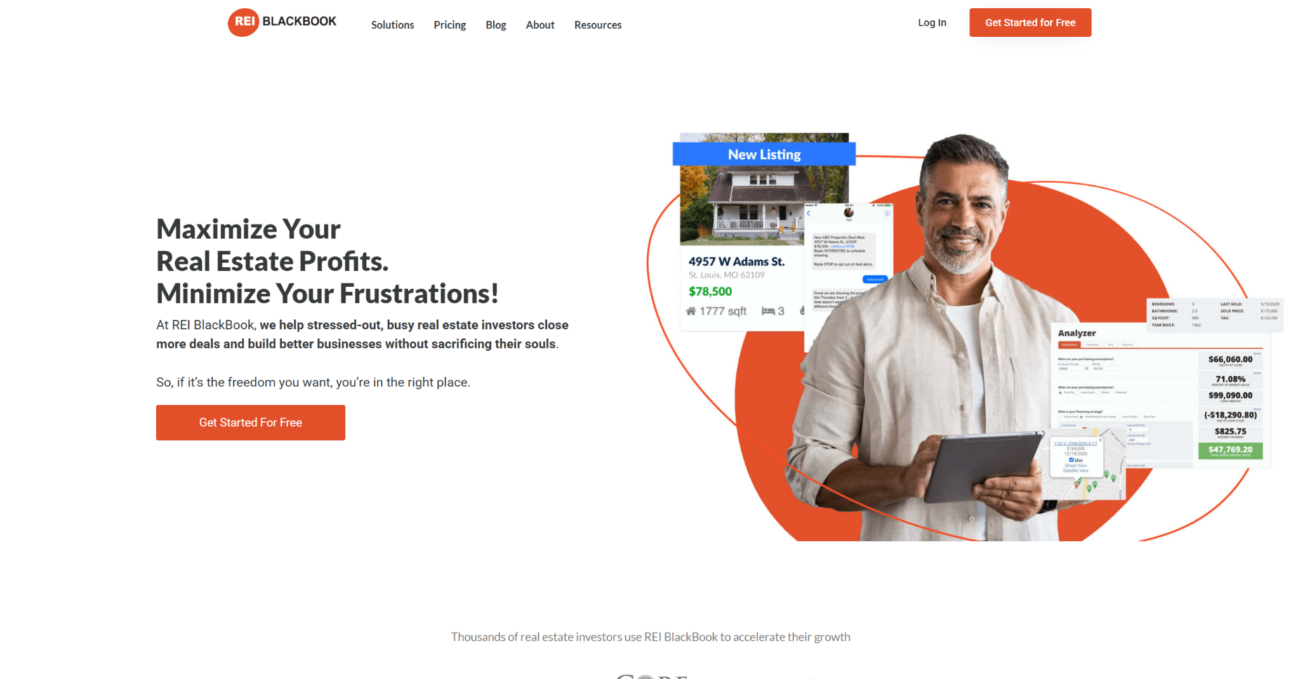
REI BlackBook adds the CRM and follow-up workflow layer to the article. It supports real estate investors with tools for lead organization, websites, phone tracking, SMS, email, automation, and contact management. The platform becomes more relevant once leads, calls, forms, or property conversations start coming in. Workflow software does not create a good deal by itself. REI BlackBook is best when the user needs to manage the process after leads enter the pipeline.
Off-market work can break down when leads are scattered across spreadsheets, inboxes, phone calls, and notes. REI BlackBook can help users organize contacts, track conversations, and keep follow-ups from getting lost. This matters when an investor is handling multiple sellers, buyers, properties, or marketing sources. Users still need good sourcing, property checks, and responsible communication. REI BlackBook is a better fit for users who need workflow control more than another property search site.
REI BlackBook is included because off-market deal flow depends on follow-up, not just discovery. Missed calls, forgotten notes, and weak organization can kill otherwise promising leads:
- CRM for real estate investors;
- Lead and contact organization;
- Websites, call tracking, SMS, and email tools;
- Follow-up workflow support;
- System for managing investor pipelines.
REI BlackBook can help users manage deal activity, but it should be paired with strong property research and clear decision rules.
Best Fit by Deal Flow Stage
The best choice depends on where the investor is stuck in the deal flow process. ForeclosureHub fits the first stage because users need distressed-property context, owner data, and market information before moving a lead forward. InvestorLift is better when the user already has a deal and needs buyer access or a disposition workflow. MyHouseDeals fits users who want to browse investor-oriented opportunities before deeper checks. REI BlackBook makes more sense when the problem is lead tracking, follow-up, and process control. These tools work better as stages in a workflow than as direct replacements for one another.
Final Thoughts
Off-market deal flow is not only about finding a property before it appears on a public listing site. The process also includes property context, owner research, pricing logic, buyer demand, follow-up, and timing. ForeclosureHub gives users the first research layer before a lead moves into outreach or deal workflow. InvestorLift and MyHouseDeals help from different sides of deal movement and opportunity browsing. REI BlackBook supports the part of the process where leads need to be organized, tracked, and followed up.
No platform can turn a weak property into a strong investment. Users still need to check records, comps, liens, condition, seller details, buyer demand, and local rules. Off-market tools are most useful when they reduce confusion and help users move through a clear research process. The safer approach is to separate discovery, verification, analysis, and follow-up instead of mixing everything together. Use the right tool at the right stage before spending serious time or money.